The KISTI project – Daejeon, Korea
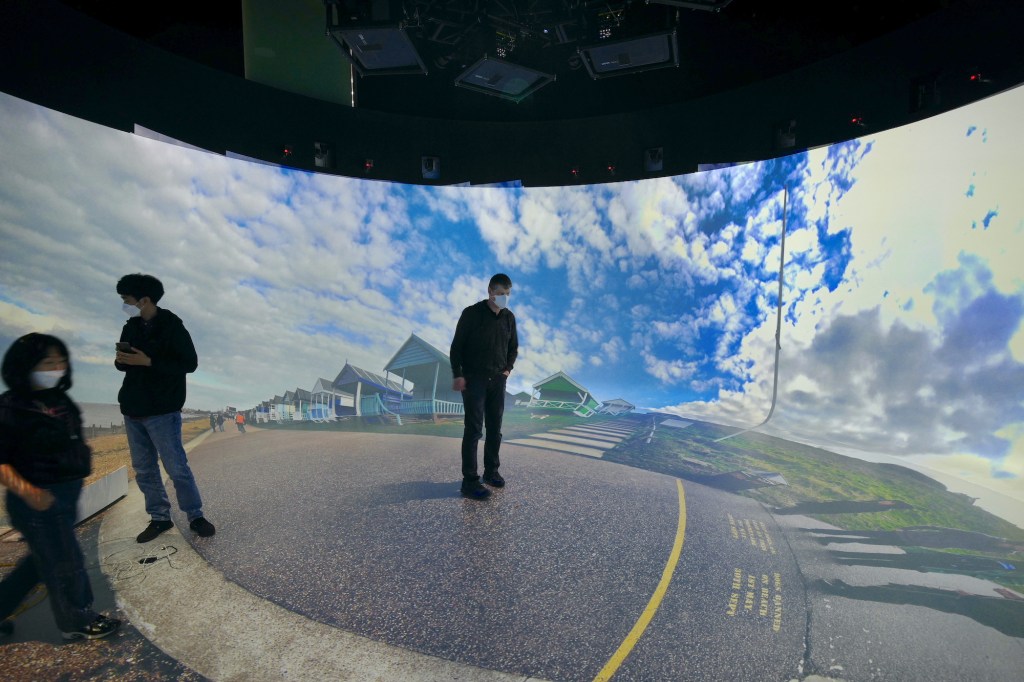
This project was brought to our attention by our client Vizwave, Korea in 2019 with the question if VIOSO could manage an upside-down dome, similar to a project that was seen at the Fraunhofer Institute in Germany.
KISTI is part of KAIST the Korean Government Research Institute and university in Daejeon, Korea, about 150km south of Seoul.


We know that VIOSO is involved with the most complex dome and simulation projects, but an upside-down dome, we never heard about it.
As the project evolved and after some research, we knew that in fact, VIOSO Anyblend VR&SIM would be the ideal calibration software to manage the blending and warping for the combined wall and floor projection.
Though at this time, we did not know about a complication in the facility design, which would make VIOSO probably the only company on the world market, which could manage the complex calibration process.
When we finally received the complete brief, it went far beyond a ‘normal’ content projection, but included interactive 3D, virtual reality display with active tracking and a content playback using Watchout.

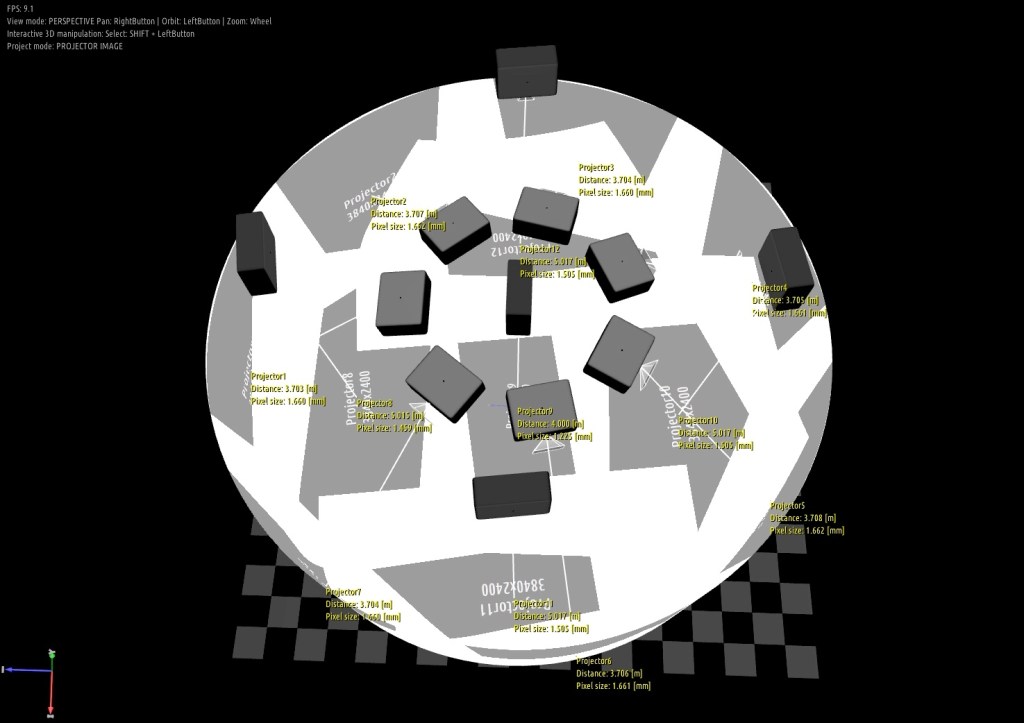
The designer deemed that 13 x 4K projectors would be needed for the project and Barco UMD415 projectors were selected.
Initially we felt that we would use the VIOSO Domemaster media server, but the client’s IT department, determined that 13 slaves and one Master Dell High end rack mounted computer with NVIDIA 8000 GPU would be used. These computers were real powerhouses, which could certainly deal with the required task.
Actually the day we arrived at the site, we were greeted with an infernal noise from the server fans, similar to standing beside a Roll Royce aircraft engine on take off. Well may not that bad, but certainly very loud.

Working on a project with so many partners involved, at a time with Covid related travel restrictions, imposed quarantine and supply chain issues, added some of the complexities.
In fact at the time, we got approval for an installation in late April 2022, Korea still required visa and quarantine.
So I had to go through the visa process, which cost us close to $500, only to find out, that at the date I collected my passport, that visa’s would be no longer required from April 1.
Likewise enforced quarantine would be abolished.
Of course this was ultimately good news. Still there were the hurdles of vaccination proof and pre-departure, post arrival Covid testing to consider.
The facility.

KISTI is located in the university city of Daejeon, almost right in the centre of South Korea.
For the project, a special space had to be constructed.

The computers were housed in a dedicated space across the hallway and the media data was send by fiber optic to the projectors.
Unfortunately, a presence of all the partners which were to be involved at the same time at the facility could not be achieve.
This created some additional challenges at the later stage.
But these are the usual hurdles when it comes to bringing the various systems under one hat.
Jurgen Krahmann, the software engineer from VIOSO, flew in from Germany to set-up Anyblend VR&SIM and to do the calibrations. Jurgen has been with VIOSO since the original foundation of the company and is highly experienced with such installations. In fact without him, we could not have completed the job.
Of course VIOSO has a number of engineers which are capable to complete such installations, but the benefit with Jurgen was, that he loves Korea and Korean cuisine.
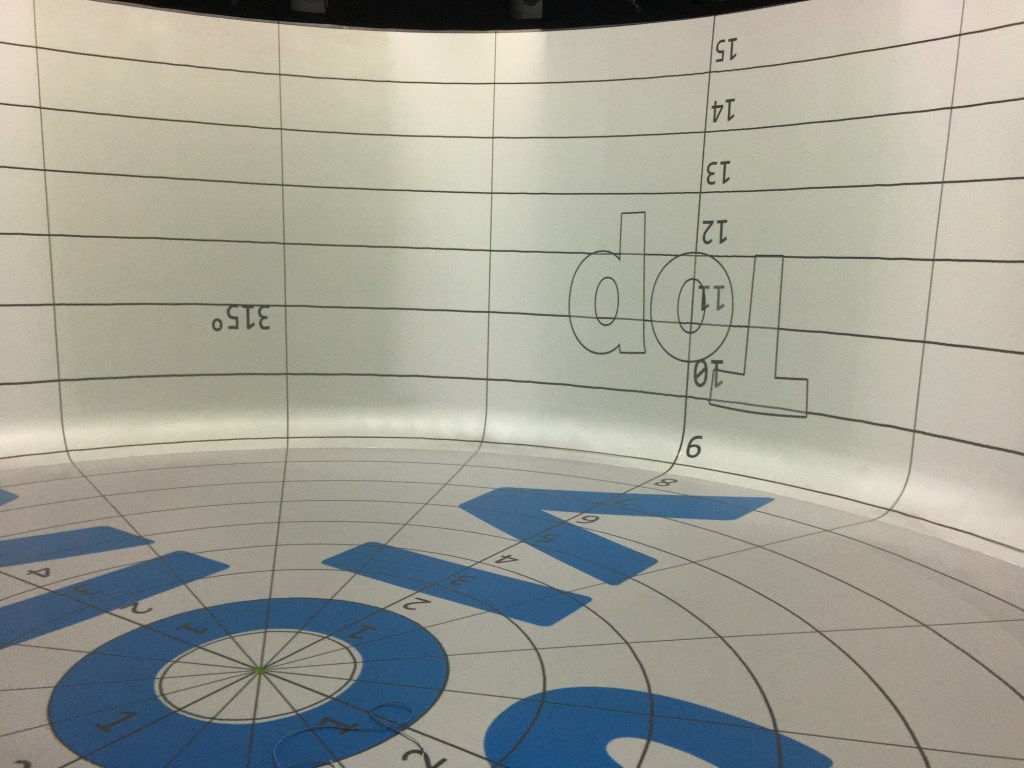
The initial set-up of Anyblend and the wall blending went without problems and were achieved in two to three days. Likewise the floor component was added without problem. The complexity, which arose, as mentioned at the beginning, came from the curved wall-floor crossover.
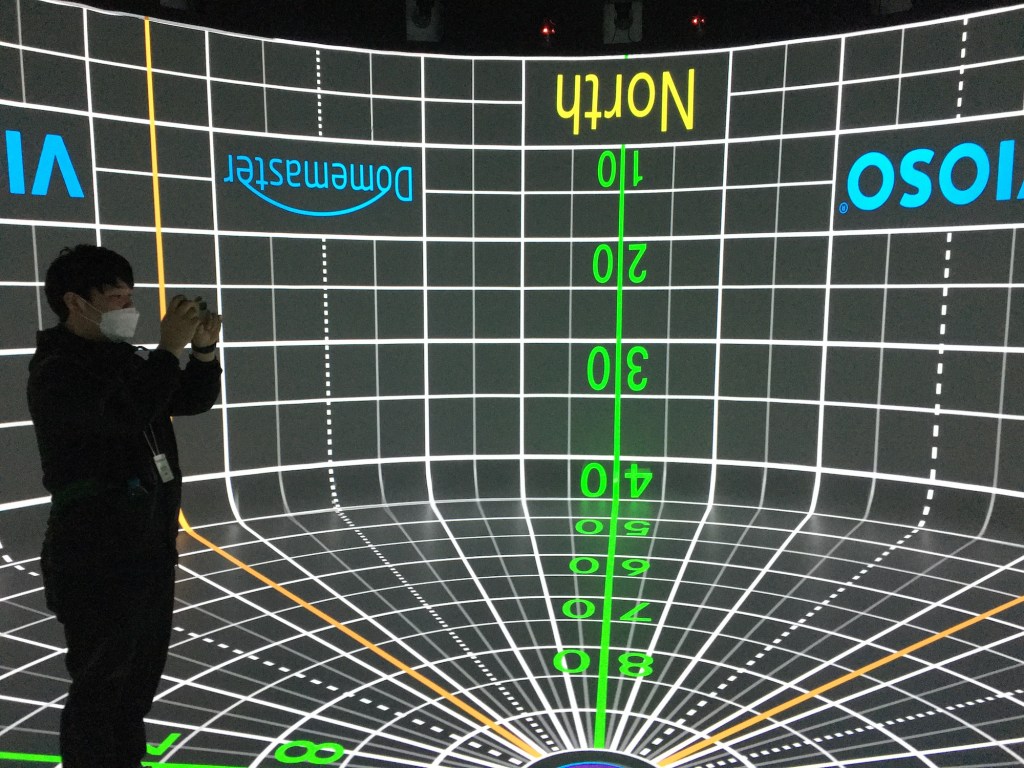
The building engineers made the radius a bit tight and as a result, there were not enough alignment coordinated visible for the camera.
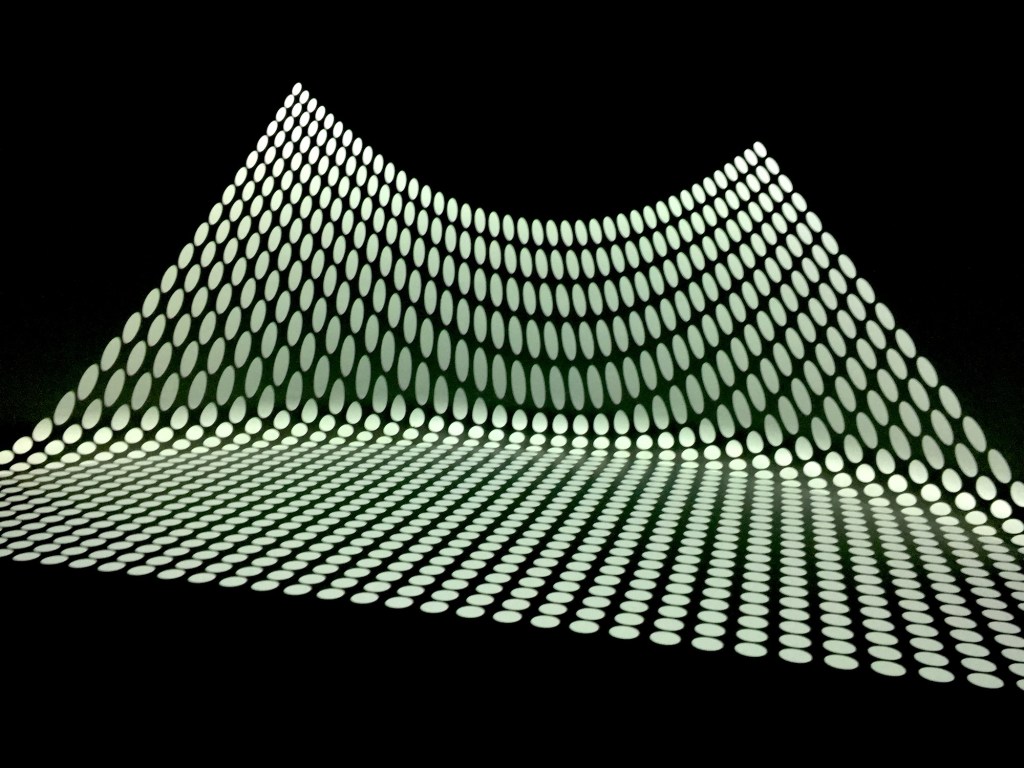
Initially we had a 5 MP LAN camera installed, but for this ‘edge’ we could not get a decent calibration. But by good luck or planning, Jurgen has brought a brand new 12 MP LAN camera. It ultra-short focal length lens covered the total area and with the higher resolution we got enough calibration points for the software to create a perfect blending and warping.
Of course, it may have been possible to do the calibration with multiple cameras, since Anyblend VR&SIM has this capability. This software is also designed to be used on multi-server installations. But multiple cameras could have created problems for the operator in the future, since any change in any of the camera positions would have made an automated re-calibration virtually impossible.

The question which arises here is about “Remote adjustments and support”?
Of course an experienced software engineer together with a local assistant can support remote system calibration and adjustments, as it would be necessary later in the project.
This came partly, because the requirements of Watchout, middleVR and WorldViz had to be included and some of their system requirements had to be aligned with the VIOSO set-up.
The issue with remote support from Germany is the time difference, plus the strictly controlled remote access to the system.

KAIST is the site for the Korean Government Super Computer facility and therefore the security level for system access is very, very high. So not only is a special permission required to access the system remotely, it can only be done at certain times of the day and with very specific computer configurations. For example Teamviewer is not permitted.
So from that perspective, our aim was to keep the system as service easy as possible.
We do recommended to have an annual on-site system maintenance, budgeted for.
How long does a re-calibration of the systems takes?
Since multi-projector systems are easily affected by environmental factors, such temperature, mechanical disturbances, etc, a re-calibration from time to time is required. This can be daily, weekly or monthly, depending on the conditions on the site.
VIOSO Anyblend has the facility for an automated re-calibration, which only has one strict requirement and that is, that the camera can not be moved.
In our set-up the installers initially mounted the camera to the projector rigging. This can be problematic, since any projector adjustment or services bears the risk, that the camera is knocked out of position. So it is important to mount the camera independently to the concrete ceiling slab. Again, it is critical to plan all these aspects beforehand to avoid cost and inconveniences later on.

A complete blending calculation with camera and projector masking engaged, takes between 45-60 minutes for the 13 projectors. A re-calibration using the existing parameter and provided that the camera-wall respective positions have not changed, takes about 20-25 minutes.
We have to keep in mind that in this installation we have the added complexity of 3D active projection.
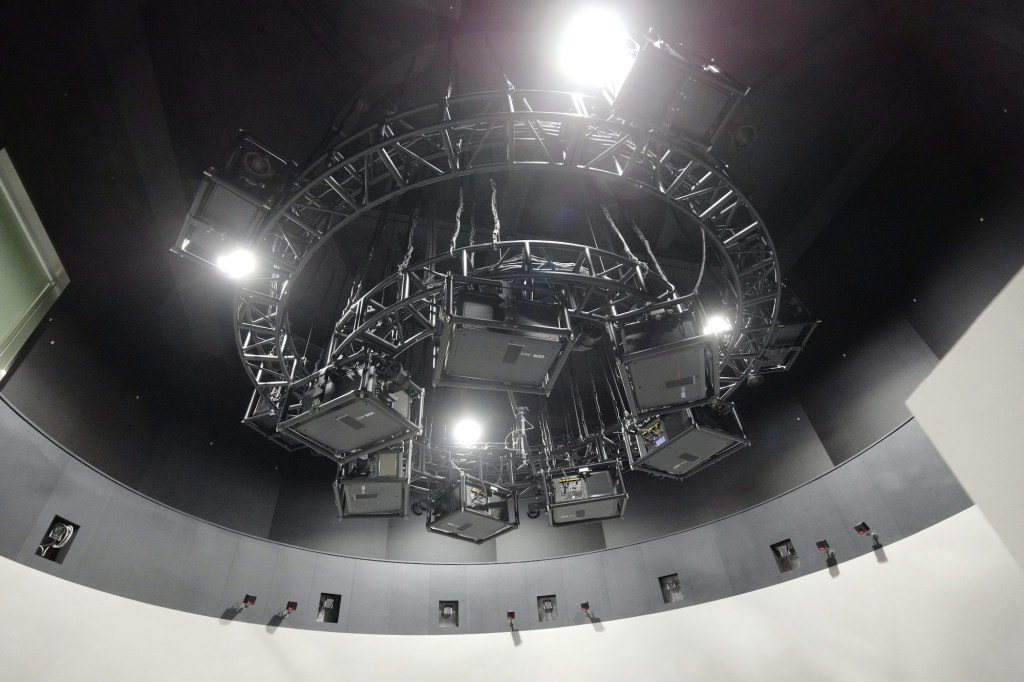
Of course, such a complex project with so many players and access restrictions to the site creates its own difficulties.
Now nearly two month after initial-sign off, we are still working on some fine tuning.
Two very important lessons can be learned from this project.
1) The availability of all critical players on site for their product implementation at the same time is critical. This in particular if lengthy to-site travel is involved.
A timely completion of the project can be better provided this way, since any technical or software issues, can be co-cooperatively solved.
While that may mean higher initial cost because people have to be paid for on-site presence, in the end the overall cost will be lower. Further more, the co-operative problem solving creates a better bonding between the various service providers and potential blame games can be avoided.
2) Closer pre-building consultation between the construction engineers and the software/ service providers, in our case VIOSO, would have ensured that the wall-floor crossover be made wider with a flatter radius, creating a better calibration environment.
As always, complex projects, such as these are providing great learning experiences.

Another possible complication is the wall coloring. The high light output of all 13 projectors combined, created the risk of cross reflection from the wall to floor and cross-wall. This cross reflection reduces the brilliance and colour depth and in particular in 3D environments can reduce the 3D effect. Again early consultation and possibly an on-site visit can reduce the cost of re-coating of the projection surface.
One other small, but significant issue arose.
The access doors to the facility are opening inward. The building code in some countries may have prohibited that anyway.
However in this case the client installed some wedges at the bottom of the door, to create a complete circle with the same wall-floor transition.
Unfortunately these wedges need to be removed if the doors are to be opened.
Ultimately a decision was made to remove the wedges altogether. This now creates calibration issues, due to the angle the camera is looking at this space and some shadow areas.
Again time consuming late corrections can easily be avoided by early consultation.
While this is not a critique on the integrator or client, it demonstrates very clearly that all aspects need to be carefully considered prior to project commencement.
Of course in this situation the language barrier also plays an important role and I like to mention Julia We, our Turnstone CEO and interpreter, which, with her interpretation skills, made this project go as smooth as it possibly could.

Incidentally, Julia can be hired for Korean based projects. She is very experienced and understands many of the audio visual requirements. Just give us a call or request her information flyer.

Overall, this project was not only very interesting, but it again demonstrated the versatility and functionality of the VIOSO Anyblend product and more importantly, the quality and dedicated support by the VIOSO team.
We also like to thank Vizwave, Korea, and the other players, like Barco, middleVR, Worldviz, Watchout for their support and seamless interfacing with our requirements.
The KISTO facility is a public facility and can be rented for public and corporate usage.
Compiled by: Norbert Schmiedeberg, Technical consultant
Technical specifications:
Total diameter 9 meter
Height of the wall 3.5 m
Projectors: Barco UMD 4K15 x 13
Computer:
DELL EMC, PowerEdge R750
● 2EA * Intel Xeon Gold 6342 24Core 2.8Ghz
● 512GB (16*32GB), 3200MT/s, RDIMMs
● 2EA * 480GB SSD SATA Hotplug Drive
● PERC H745 Raid Controller Card
● 1400Watts Redundant Power Supply (1+1)
● Dual Port Onboard 1Gb Eternet
● Mellanox ConnectX-6 VPI AdapterCard, HDR Infiniband
● Nvidia Quadro RTX8000
● 2U Rack Type
Operating system: WIN 10
Software:
VIOSO Anyblend VR&SIM
MiddleVR
WorldViz
Watchout
Camera: 1” 12mp 4096×3000 but only 3000×3000 used
Lens: 2.7mm fisheye (approx 360×185 degree)
Discover more from ITI-Image Group, Sydney
Subscribe to get the latest posts sent to your email.
